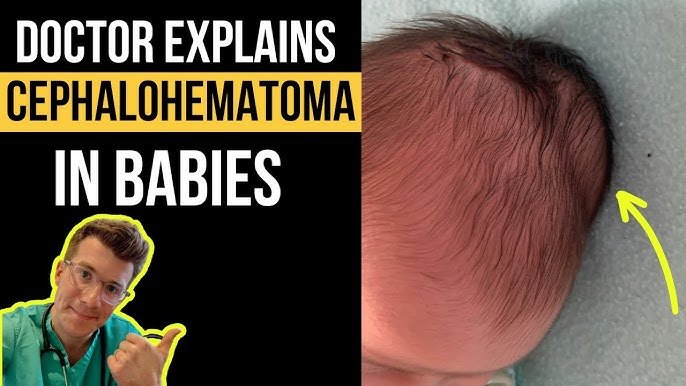
Cephalohematoma is a condition seen in some newborn babies shortly after delivery, where blood collects between the skull bone and its protective covering. This happens due to pressure on the head during birth, especially in longer or assisted deliveries. Although the appearance can be worrying for parents, cephalohematoma is usually harmless and resolves on its own without medical intervention or long-term effects.


Understanding cephalohematoma is important for new parents because it helps reduce anxiety and confusion during the early days of a baby’s life. In most cases, the swelling appears within hours or days after birth and slowly changes in size as the body naturally reabsorbs the trapped blood. With proper awareness, cephalohematoma can be managed safely through observation and routine medical checks.
What is cephalohematoma
Cephalohematoma is a medical condition where blood gathers beneath the periosteum, the thin layer covering the skull bone. Unlike other birth-related swellings, cephalohematoma does not cross the suture lines of the skull, which makes it easier for doctors to identify. It usually appears as a localised lump that develops gradually after delivery rather than immediately at birth.
In clinical terms, cephalohematoma is considered a self-limiting condition, meaning it heals without active treatment. The body slowly breaks down and absorbs the collected blood over time. While the swelling may feel firm or slightly raised, it does not typically cause pain to the newborn. This natural healing process is one of the key reasons cephalohematoma is generally not considered dangerous.
Causes of cephalohematoma
The main cause of cephalohematoma is pressure on the baby’s head during childbirth, which can cause small blood vessels to rupture under the scalp. This is more likely in prolonged labour or when medical tools such as forceps or vacuum extraction are used. These forces create stress on the delicate tissues of the newborn skull.
Other contributing factors include larger-than-average babies, first-time deliveries, and difficult vaginal births. These situations increase the likelihood of trauma to the scalp area, leading to cephalohematoma. However, it is important to understand that this condition is not caused by parental actions and is a recognised outcome in some natural and assisted deliveries.
Symptoms and early signs
The most noticeable symptom of cephalohematoma is a soft or firm swelling on one side of the baby’s head. This swelling may not be visible immediately after birth and often becomes more apparent after several hours or even days. It is usually localised and does not spread across the entire scalp.
As cephalohematoma develops, the lump may appear to grow before gradually reducing in size over time. In some cases, mild jaundice can occur due to the breakdown of red blood cells within the collected blood. Despite its appearance, cephalohematoma does not typically cause discomfort or affect the baby’s feeding or behaviour.
Cephalohematoma vs caput succedaneum
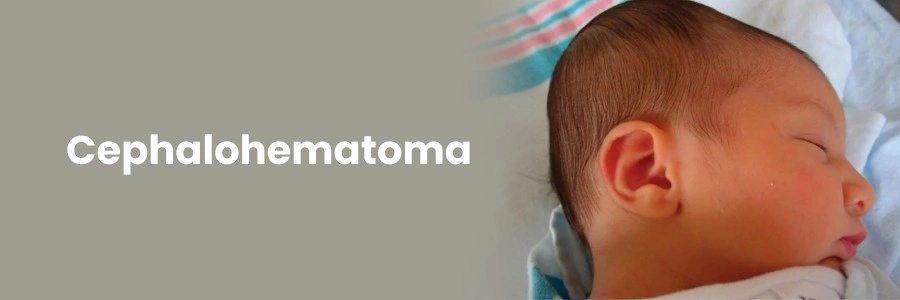
Cephalohematoma is often confused with caput succedaneum, but they are different conditions affecting newborns. Caput succedaneum is swelling of the scalp that occurs above the skull bone, while cephalohematoma forms underneath the periosteum. This key difference affects both the appearance and the healing process of each condition.
Unlike caput succedaneum, cephalohematoma does not cross skull suture lines and tends to appear later after birth. Caput swelling usually resolves within a few days, while cephalohematoma may take weeks or months to fully disappear. Understanding this distinction helps parents recognise cephalohematoma correctly and avoid unnecessary concern.
Diagnosis and NHS perspective
Cephalohematoma is usually diagnosed through a physical examination by a healthcare professional. Doctors assess the size, location, and firmness of the swelling to confirm that it is cephalohematoma rather than another type of head injury. In most cases, no imaging tests are required unless complications are suspected.
From an NHS perspective, cephalohematoma is generally managed conservatively. This means that doctors recommend monitoring the condition rather than active treatment. Parents are advised to attend regular check-ups to ensure the swelling is reducing naturally. Cephalohematoma is considered a self-resolving condition in most newborns.
Treatment options for cephalohematoma
There is usually no specific medical treatment required for cephalohematoma because the body naturally absorbs the blood over time. Doctors typically recommend a watch-and-wait approach, ensuring the condition improves gradually without intervention. This makes cephalohematoma one of the more manageable newborn conditions.
In rare cases where complications arise, such as jaundice or infection, targeted treatment may be required. For example, phototherapy can be used if bilirubin levels become too high. However, most cases of cephalohematoma resolve without any surgical or invasive procedures, making it a largely non-threatening condition.
Healing time and recovery process
The healing time for cephalohematoma varies from baby to baby but generally ranges from a few weeks to several months. During this time, the body slowly breaks down and absorbs the trapped blood. Parents may notice that the swelling changes in size before gradually disappearing.
In some instances, cephalohematoma may lead to calcification, where the lump becomes firmer due to hardened blood. This is known as calcified cephalohematoma and may take longer to resolve. Even in such cases, the condition often improves naturally with time, although medical evaluation may be required in persistent cases.
Complications and when to seek help
Although cephalohematoma is usually harmless, there are occasional complications that parents should be aware of. These may include jaundice, mild anaemia, or, very rarely, infection. Monitoring the baby’s condition during recovery is important to ensure that no additional issues develop.
Medical attention should be sought if the swelling increases rapidly, becomes red or warm, or if the baby develops a fever or unusual irritability. These signs may indicate complications that require further assessment. Early medical review ensures that cephalohematoma remains a safe and manageable condition.
Conclusion
Cephalohematoma is a common newborn condition that typically resolves without medical intervention. While it may look concerning at first, it is generally harmless and part of the natural healing process after birth. With time, most babies recover fully without any long-term effects or complications.
Understanding cephalohematoma helps parents feel more confident during the early stages of newborn care. By recognising its symptoms, differences from similar conditions, and normal healing process, families can ensure safe monitoring and peace of mind throughout recovery.