The frailty index score calculator UK is a key concept used within the NHS to evaluate how vulnerable an individual may be due to declining physical and physiological resilience. Frailty is not simply linked to age, but rather to a combination of health deficits that increase the risk of falls, hospital admissions, disability, and dependency on care services across community and clinical settings.


In UK healthcare systems, the frailty index score calculator UK helps clinicians and care professionals identify patients who may require early intervention. By assessing patterns of weakness, chronic illness, and functional decline, healthcare providers can design more effective treatment plans. This structured approach supports preventative care and ensures patients receive appropriate support before their condition worsens significantly.
Understanding Frailty Index Score Calculator UK in Clinical Practice
The frailty index score calculator UK is widely used to measure cumulative health deficits, which may include physical limitations, long-term diseases, cognitive impairment, and reduced independence. The more deficits a person has, the higher their frailty score becomes, indicating increased vulnerability to adverse outcomes such as hospitalisation or loss of independence.
Within NHS clinical environments, the frailty index score calculator UK supports decision-making by offering a structured way to evaluate patient risk. It is particularly useful in geriatric medicine, where understanding functional decline is essential. Clinicians use it alongside medical judgement to ensure that treatment plans reflect both medical complexity and real-world patient needs.
Clinical Frailty Scale and Its Role in Frailty Index Score Calculator UK
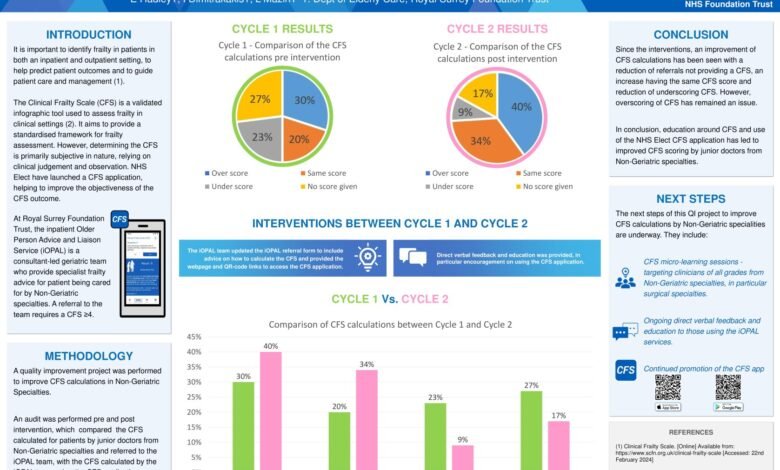
The Clinical Frailty Scale (CFS) is a central component of the frailty index score calculator UK framework. It uses a nine-point scale that categorises individuals from very fit to terminally ill, based on mobility, energy levels, and ability to carry out daily activities. This makes it a practical and fast tool for healthcare professionals in busy clinical environments.
When applied within the frailty index score calculator UK system, the Clinical Frailty Scale helps standardise assessment across hospitals and primary care settings. It enables doctors and nurses to quickly evaluate patient status and make informed decisions about treatment intensity, discharge planning, and long-term care requirements, ensuring consistent care delivery across the NHS.
Electronic Frailty Index and Data-Driven Frailty Index Score Calculator UK
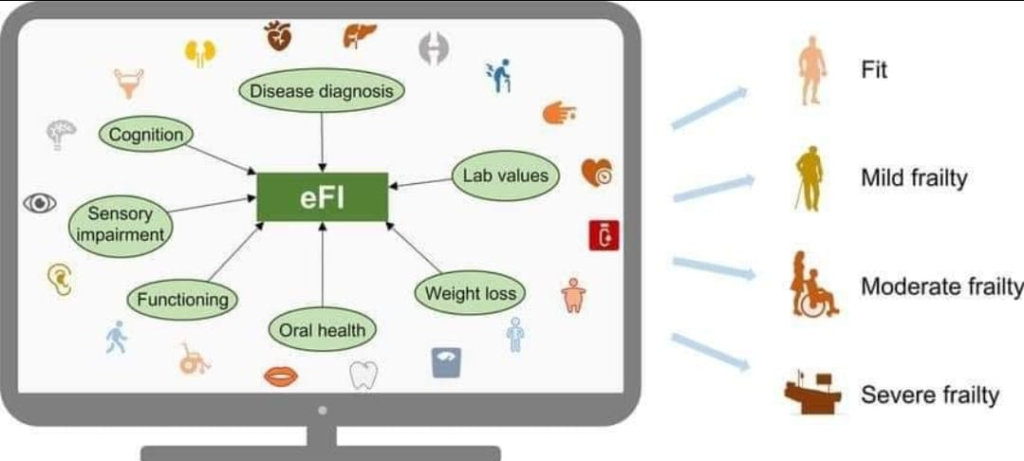
The electronic Frailty Index (eFI) enhances the frailty index score calculator UK by using routinely collected electronic health record data. It analyses up to 36 health deficits, including diagnoses, medications, and laboratory results, to generate a numerical frailty score. This automated system allows for large-scale population health management.
In the UK, the frailty index score calculator UK becomes even more effective when integrated with eFI systems in general practice. It allows GPs to proactively identify patients at risk of deterioration without requiring manual assessment. This data-driven approach supports early intervention strategies and improves long-term outcomes for older populations.
How Frailty Index Score Calculator UK Is Interpreted in NHS Care
Interpreting results from the frailty index score calculator UK involves categorising patients into different levels of frailty, such as fit, mild, moderate, or severe. Each category reflects increasing risk of adverse outcomes, including hospital admission, falls, and reduced independence. These classifications help healthcare professionals prioritise care effectively.
The frailty index score calculator UK also plays a significant role in personalised treatment planning. Patients with higher scores may require adjusted medication, increased monitoring, or referral to community support services. This ensures that care is tailored to individual needs and helps prevent unnecessary hospitalisation or complications.
Importance of Frailty Index Score Calculator UK in Preventive Healthcare
The frailty index score calculator UK is essential for preventive healthcare strategies within the NHS. By identifying frailty early, clinicians can introduce interventions such as physiotherapy, nutritional support, and social care services. This proactive approach reduces strain on emergency departments and improves patient quality of life.
Additionally, the frailty index score calculator UK supports integrated care across hospitals, GPs, and community health teams. It enables better coordination of services and ensures that vulnerable individuals receive consistent monitoring. This improves efficiency across the healthcare system while supporting long-term sustainability of NHS resources.
Limitations and Clinical Considerations of Frailty Index Score Calculator UK
Although the frailty index score calculator UK is highly useful, it is not a standalone diagnostic tool. Clinical judgement remains essential, as frailty scores do not always capture social, emotional, or environmental factors that can significantly impact a patient’s overall wellbeing and care requirements.
The frailty index score calculator UK may also vary depending on data quality and clinical interpretation. Differences in record-keeping or assessment methods can influence results. Therefore, healthcare professionals must interpret scores carefully and consider them alongside broader clinical assessments and patient history.
Conclusion on Frailty Index Score Calculator UK in NHS Practice
The frailty index score calculator UK is a valuable tool that supports modern NHS healthcare by improving the identification and management of vulnerable patients. Through structured assessment methods such as the Clinical Frailty Scale and electronic Frailty Index, clinicians can make more informed and timely decisions.
Overall, the frailty index score calculator UK contributes to better patient outcomes, more efficient healthcare delivery, and improved resource allocation. When used correctly alongside clinical expertise, it plays a vital role in supporting safe, personalised, and preventive healthcare across the United Kingdom.